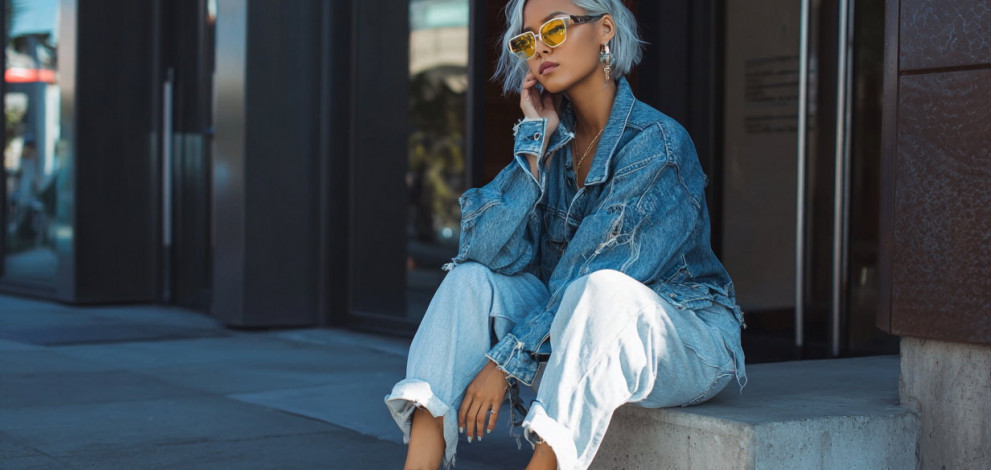
Even a timeless classic needs a pulse check. If your blues have hit a creative plateau, it’s time to stop playing it safe and start choosing your stars
The fashion industry is notoriously fickle, yet denim remains its most constant chameleon. It serves as the ultimate baseline, but every few seasons, a collective fatigue sets in a “denim daze” where the standard straight-leg and blazer combination feels less like a timeless classic and more like a creative white flag.
For Spring 2026, across runways, inside showrooms, and out on the street, denim is being pushed well beyond its comfort zone. The industry is stepping away from the stiffness of the perfectly understated jeans and leaning into something more tactile, more shaped, more dialed-in.Hems are dragging a little longer, pooling right by the ground, indigo is back in deep, moody shades, and silhouettes feel properly put together, and denim? It’s no longer the easy fallback for last-minute dressing. There’s an understated edge to it, one that only sharpens the longer you look.
Here are five ways to recalibrate the relationship with the world’s hardest-working fabric this season.
1. The architectural indigo shift
Forget the lived-in, whiskered vintage washes that have dominated for years. This season, the most directional move is a return to raw, saturated indigo with zero distressing. We’re seeing a shift toward “hard” denim pieces that hold their shape with a sculptural, almost couture-like rigidity. Look for high-waisted, wide-leg silhouettes that feature sharp permanent creases or exaggerated turn-up cuffs. The goal is a clean, architectural line that mimics the formality of a tailored pair of trousers but retains the grit of denim.
2. The “double-denim” gradient
The Canadian Tuxedo has been rehabilitated to death, but the fresh iteration lies in tonal subversion. Instead of matching your blues, play with a gradient. Pair a bleached, almost-white denim shirt with a deep navy utility skirt, or layer a grey wash vest over traditional indigo jeans. This mismatch breaks up the visual monolith of the look, making it feel curated rather than accidental. It’s about the tension between different stages of a garment’s life cycle.
3. Proportional play: the puddle and the point
The “Big Pants, Small Top” era has evolved into something more extreme. We are seeing a fascination with uninterrupted length. Think jeans so long they pool around the foot, the “puddle” hem paired not with a chunky sneaker, but with a razor-sharp, pointed-toe slingback. This interplay between the slouchy, utilitarian weight of the denim and the aggressive femininity of the footwear creates a silhouette that feels quintessentially modern.
4. Denim as eveningwear
We’re finally outgrowing the “nice top and jeans” safety net, and about time. This spring, denim is getting dressed up, properly dressed up, with the kind of attention usually reserved for evening silk. Designers are having fun with it again. Think denim cut to mimic lace, flashes of silver foil that catch the light mid-step, beadwork that feels a little unexpected on something so inherently utilitarian. There’s a sense of play here.
5. The deconstructed utility
The industry is currently obsessed with “honest” clothes garments that look like they’ve been worked in, even if they’ve never seen a day of manual labor. This isn’t about faux-ripped knees; it’s about structural deconstruction. Look for jeans with shifted seams, misplaced pockets, or “franken-denim” panels that combine two different washes. It’s a nod to the DIY spirit of street style, elevated through high-end construction. It suggests that your jeans aren’t just a purchase, but a piece of evolution.